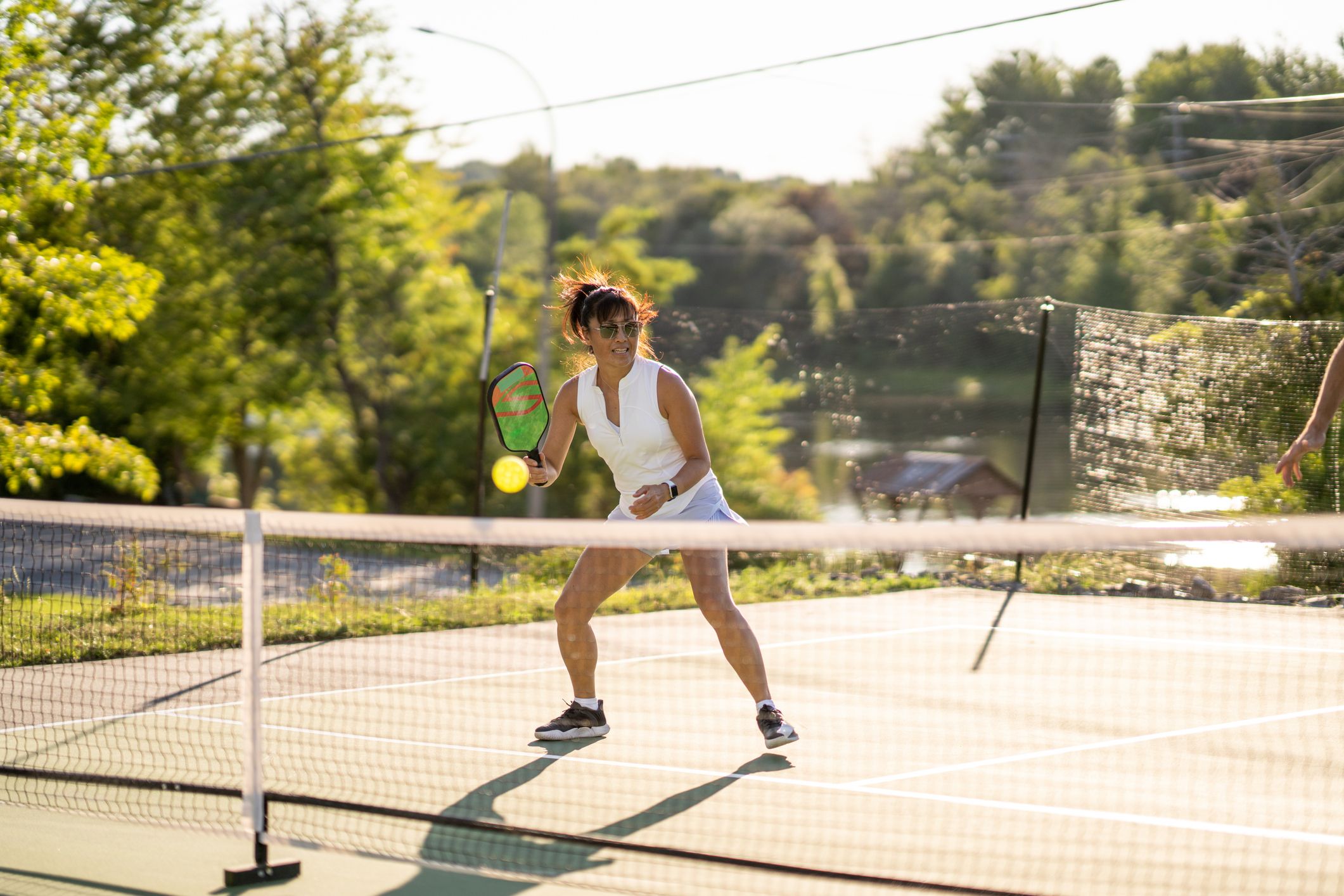
There’s a term commonly used in pickleball for players who are inclined to take a shot that isn’t necessarily a shot that belongs to them. The term is poaching. This refers to moving from one’s position Visit official website to intercept a ball intended for one’s partner. This potentially can be a bad strategy for several reasons, yet sometimes it’s a practical part of the game that works to your best advantage.
Just to be completely clear, poaching is NOT hogging. It may have the appearance of that, but poaching is a selective shot, whereas hogging is nearly complete dominance of taking an overwhelming number of shots. In doubles, it is difficult to have complete equity where each partner has the same number of shots, but when it is obvious that a partner is taking an inordinate number of shots, then that’s different than poaching.
In this article, we’ll look at how it’s not only frustrating to some players but also an effective strategy with some teams that it plays to their advantage.
The Bad
The “art” of poaching has some disadvantages. One of the main ones is that it leaves your court open. When you move to intercept the ball, you are leaving your court open, which means your opponent can easily hit the ball to your open court, resulting in an easy point for them. The poach then puts both players on one side of the court, thus leaving one side of the court uncovered. Another, and sometimes unintentional, result of poaching is that it does not instill confidence in your teammate, making them feel like you don’t trust their abilities.
Poaching can also cause communication breakdown between partners. When this happens repeatedly, it affects the team dynamic, creating a downward spiral of confidence. If your partner was counting on you to cover a particular area of the court and you leave that area to poach, they may be caught off guard and need help knowing where to cover, which can lead to confusion and mistakes.
Lastly, deciding to poach a shot requires quick reflexes and accurate prediction of the opponent’s shot, which can be challenging to execute. If you miss the ball, your opponent will have an easy shot, which can result in losing the point.
The Good
There is actually a good part to poaching. Simply put, if it’s part of your strategy, it can be a powerful part of your overall game. In doubles play, remember that the forehand is the preferred shot choice, even if your partner has a decent backhand. Many teams who understand and trust their partner’s decision to take this shot know that they need to adjust accordingly to cover the court adequately. If the opposition returns the ball, they learn to shift over to cover the open court.
 Site Title
Leave a comment